



Every Little "Why," Answered in One Snap
Built by an internationally award-winning education team
More than answers — a learning partner for kids
Built from scratch for ages 4–12 — every feature has a learning goal.
Kids everywhere already learn with AI
Not a trend — the new normal. From Hong Kong to the world, AI is already part of everyday learning.
of students globally now use AI tools to study
Source: Digital Education Council
Primary & secondary students use AI; nearly 1 in 4 say they'd struggle on homework without it.
Fully embedded via the MOE SLS portal; AI assistants from Primary 4.
Have used AI for schoolwork; 33% use it as a personal tutor.
of K-12 students have used AI; 42% use it every day.
From 2025, AI is a compulsory school subject from kindergarten to grade 12.
of ninth-graders use generative AI; 94% aware, 53% taught by teachers.
Children learn about AI in school from around age 6.
Sources: OHKF, Taiwan NAER × Academia Sinica, Singapore MOE, Save My Exams, China Ministry of Education.
Parents are bringing AI home — with boundaries
AI is already common at home, and parents draw clear lines on how it's used.
feel positive about AI in kindergarten
Most say kindergarten is a suitable starting point for AI literacy.
Source: HK kindergarten parent study (n=215)
What parents approve AI for
Source: Pew Research Center
The 'age 8 & under' trend
of parents of kids aged 8 and under already let them use AI at home.
At this age it's mostly gamified platforms, adaptive reading tools and educational toys — not text chatbots. Only 8% of parents teach how AI works; the rest use it for quick answers when they're busy.
Source: Common Sense Media
The Cast
Meet the cast




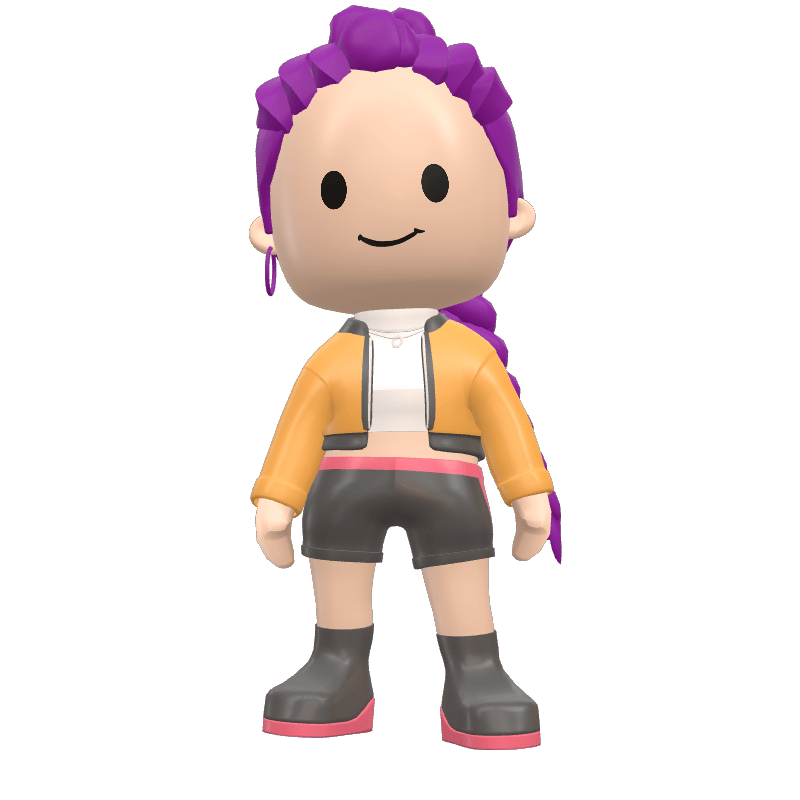

Play
Live missions
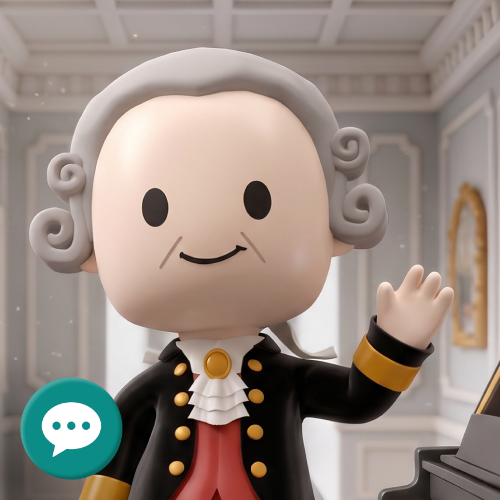
Meet Beethoven 1
with Beethoven
A mini-challenge from the musician Beethoven! Answer 3 simple questions to test how well you know him!
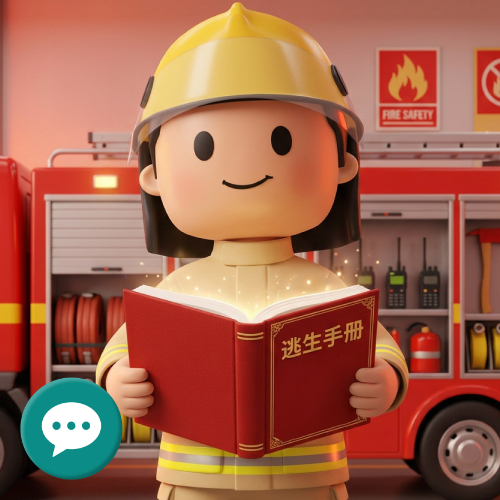
Fire Safety Basics 1
with Fire Station Officer
What should you do in a fire? Join the Fire Captain's special fire safety training, challenge yourself with 3 common sense questions, and learn how to protect yourself and your family!
We've already thought about what worries you most.
Is AI safe? Privacy? Screen time? Answered, one by one.
Content safety
Every reply is kid-filtered + human-checked; sensitive topics auto-deflect.
Privacy protected
Chats are never used to train AI. Data stored in HK / Singapore.
Weekly progress report
A Sunday email: what they learned and what they love.
No ads · No in-app purchases
No ads, no in-app purchases, no upgrade pop-ups.
Free to start
Free to download and try — no credit card.
Trusted by families and schools
Brilliant AI app for young kids. My 7 year old son has played this app for 2 days and he learnt so much — from deep-sea to outer space! The Magic Card collection is such a beautiful idea that made learning so much more rewarding for him.
學生透過平板與 AI 角色對話,穿越時空到紐約練習英語;結合 AR 探索任務,按個人節奏互動學習,讓課堂變成充滿驚喜的語言冒險。
好多時候,會有人覺得科技或者 AI 會阻礙人同人之間嘅交流。但只要設計得宜,科技反而會打破面對面交流嘅尷尬與限制,促進學生分享內心世界。十分欣賞 RO 有溫度嘅設計,正正能夠做到學生將平日唔敢向人透露嘅心底話表達出嚟。
我哋用 RODYSSEY AI 案例,參加教育大學全球 AI in Education Competition 2025 比賽,獲得公開組季軍,成績有目共睹。
What parents ask most
What age is it for?+
Ages 4–12 (K2 to P6). Content, vocabulary and explanation depth automatically adapt to your child's age and interests.
Will it teach wrong things?+
Rody's kids' content is aligned to the local primary curriculum — it's not raw ChatGPT. Parents can review every conversation in the dashboard and report anything that looks off; we follow up.
Can anyone see my child's conversations?+
Parents can view the full chat history in the dashboard. No third party or advertiser sees the content. Conversations are NEVER used to train AI.
How is it different from ChatGPT / Duolingo / Khan Academy?+
ChatGPT isn't built for kids, has no AR and no parent oversight. Duolingo is language. Khan is academic subjects. Rody builds curiosity and learning habits — starting from the real world, not worksheets.
Will it increase screen time?+
Rody's design encourages an 'explore → snap → learn' loop. 20–30 minutes a day is plenty, and parents can enforce a hard limit that auto-locks.
Starting today, give your child's “why” an answer — every time.
Free to download, start anytime.